
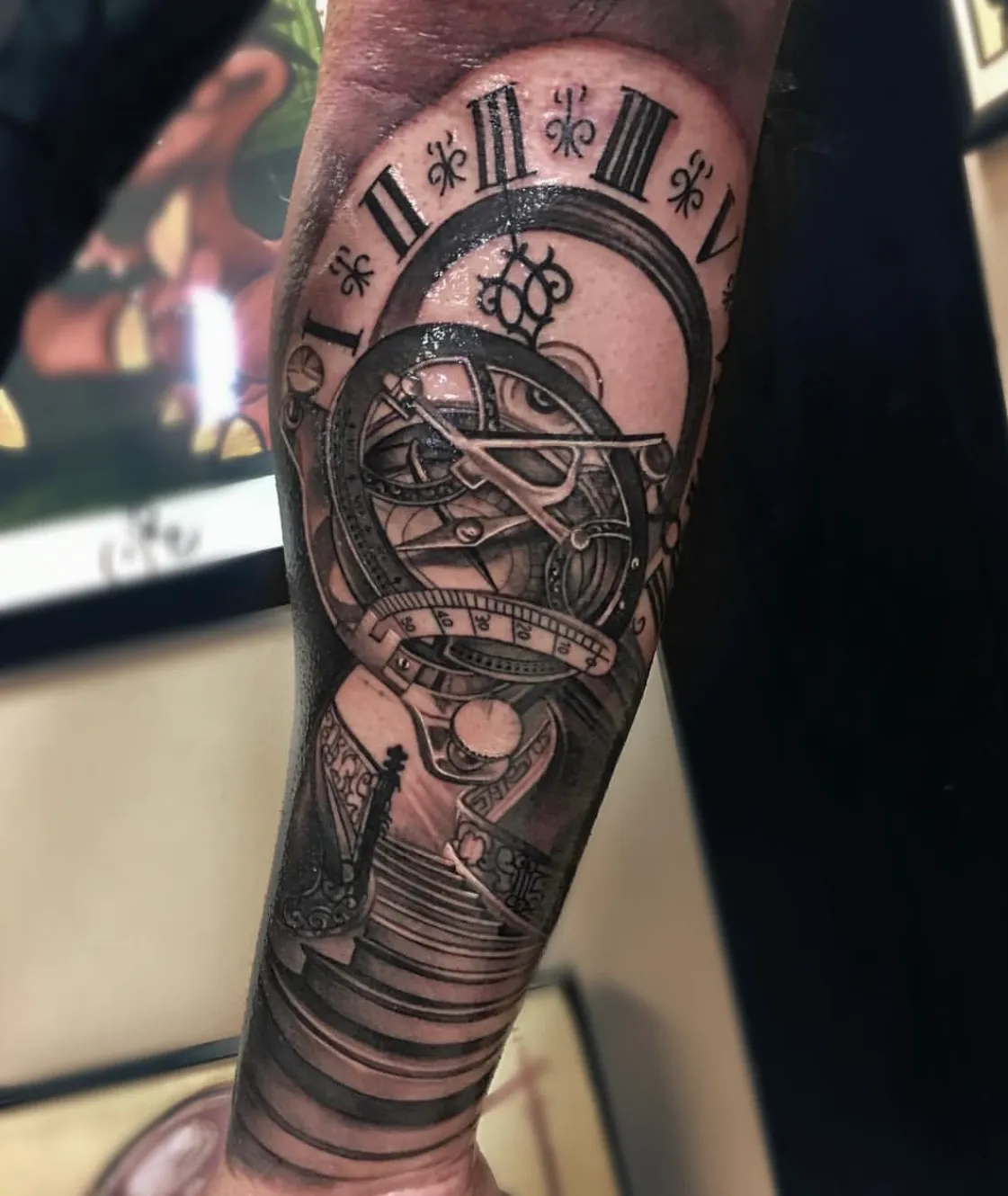
If you are staring at an old mistake and wondering, can you cover up a black tattoo, the reality is that while black ink is the most stubborn occupant of your dermis, it isn’t invincible. At Till The End Tattoos in Tampa, Florida, we view these projects not as simple “paint-overs,” but as complex engineering tasks. Covering dense black pigment requires a master’s understanding of color theory, needle depth, and skin trauma management to ensure the old ghost doesn’t haunt the new piece.
Key Takeaways
- Saturation Control: Total concealment depends on the density of the existing black pigment and the complexity of the new design.
- Expansion Required: Expect the new artwork to be at least 30% to 50% larger than the original to allow for proper blending.
- Color Science: Success relies on “optical mixing,” where dark cool tones like emerald, navy, or plum are used to neutralize the black.
- Strategic Prep: Laser lightening in our Tampa facility can significantly broaden your design options for heavily saturated pieces.
Table of Contents
ToggleHow does the process of hiding dark ink actually work?
Tattooing is a process of layering translucent ink within the skin, meaning you cannot simply “white-out” a dark image. To answer, can you cover up a black tattoo, you must realize the new ink sits on the same plane as the old. We use high-contrast textures and deep-hue saturation to trick the eye, effectively “burying” the old lines under complex new patterns.
The Strategic Framework for Ink Reconstruction
- Saturation Assessment: We evaluate the “blowout” and ink depth of the original piece. If the skin is scarred or the black is raised, we must adjust our shading technique to compensate for the altered skin texture.
- Design Mapping: Your artist draws a custom stencil that places the darkest “anchor points” of the new design directly over the heaviest black areas of the old tattoo.
Pigment Layering: We utilize a “multi-pass” approach, often starting with cooler, dark tones to stabilize the old ink before moving into the final color palette and detail work.
Why do clients seek out tattoo cover-ups in Tampa?
The motivation for a rework is rarely just about the ink; it’s about the person you’ve become versus the person who sat in that chair years ago. Whether it’s a change in lifestyle or a shift in aesthetic taste, our goal is to provide a clean slate that matches your current identity.
- Aesthetic Evolution: Your style has matured from basic flash to custom, high-art compositions.
- Quality Restoration: The original lines have blurred or “mapped out” due to the intense Florida sun or aging skin.
- Technical Correction: Poorly executed “kitchen table” tattoos with scarring or uneven depth need professional intervention.
What specific factors dictate your cover-up options?
Feature | Low Difficulty (Easier) | High Difficulty (Challenging) |
Ink Density | Faded grey or washed-out black | Solid, “jet-black” tribal or saturated blocks |
Age of Ink | 10+ years (Natural fading) | Fresh ink (1–2 years old) |
Skin Texture | Smooth, healthy dermis | Keloid scarring or heavy sun damage |
Design Goal | Large, organic shapes (Florals/Animals) | Small, minimalist, or geometric linework |
Can you cover up a black tattoo with lighter colors effectively?
Technically, you cannot use light colors like yellow or sky blue to fully mask black ink without the old design eventually bleeding through. To solve the question of can you cover up a black tattoo with a lighter palette, we often use “distraction techniques.” This involves using high-detail white highlights and opaque “cover-up” pigments that are formulated to sit more heavily in the skin, though dark secondary colors remain the gold standard.
Professional Grounding Terms
- Laser Fading: The use of Q-switched or Pico lasers to break down carbon particles before tattooing.
- Dermal Saturation: The concentration of ink particles within the second layer of skin.
- Optical Camouflage: Using complex textures—like dragon scales or floral petals—to hide linear shapes.
Expert Perspective
“The biggest mistake clients make is assuming a cover-up is just a bigger version of the old tattoo. In reality, it’s about ‘flow.’ If the new piece doesn’t follow the natural musculature of your body, it will look like a patch. We use the old black ink as ‘free shading’ whenever possible to give the new piece more depth than a fresh tattoo on blank skin.”
When should you consider laser fading before a cover-up?
While we take pride in our ability to rework almost anything, some tattoos are simply too “angry” or dark for an immediate fix. If your goal is a very specific, bright, or delicate new piece, a few sessions of laser treatment can be the difference between a “good” cover-up and a masterpiece. This process shatters the large ink clusters, allowing the body’s immune system to clear the path for new pigment.
Conclusion
Reclaiming your skin is a collaborative process between your vision and the artist’s technical constraints. While black ink presents the highest hurdle in the industry, modern pigments and advanced shading techniques have made the “impossible” cover-up a thing of the past. By choosing a specialist who understands the “grit” of skin reconstruction, you turn a source of regret into a centerpiece of pride.
Call (786) 205-9570 to schedule your consultation at Till The End Tattoos and finally discover how can you cover up a black tattoo with a design that actually fits who you are today. Contact us today or visit our website.
Frequently Asked Questions
Can any black tattoo be covered up?
Almost any piece can be addressed, but “blackout” styles or heavily scarred tissue may require 2-3 sessions of laser fading first to ensure the new ink remains stable and vibrant.
Do cover-up tattoos have to be bigger?
Yes, they typically need to be significantly larger. This provides the “real estate” needed to blend the old ink into the background of a much more expansive and distracting composition.
Can you use white ink to cover black tattoos?
White ink is used sparingly for highlights to create contrast. It will not “cancel out” black ink like a corrector; instead, it provides the visual “pop” that draws the eye away from the old work.
How many sessions does a cover-up take?
Expect a minimum of two sessions. The first pass establishes the new foundation, while the second pass (after healing) is crucial for “locking in” the cover-up and ensuring no black ink has migrated back to the surface.
Is laser removal always necessary before a cover-up?
It is not mandatory, but it is highly recommended for clients who want a specific color palette that doesn’t include deep blues, purples, or heavy blacks.