
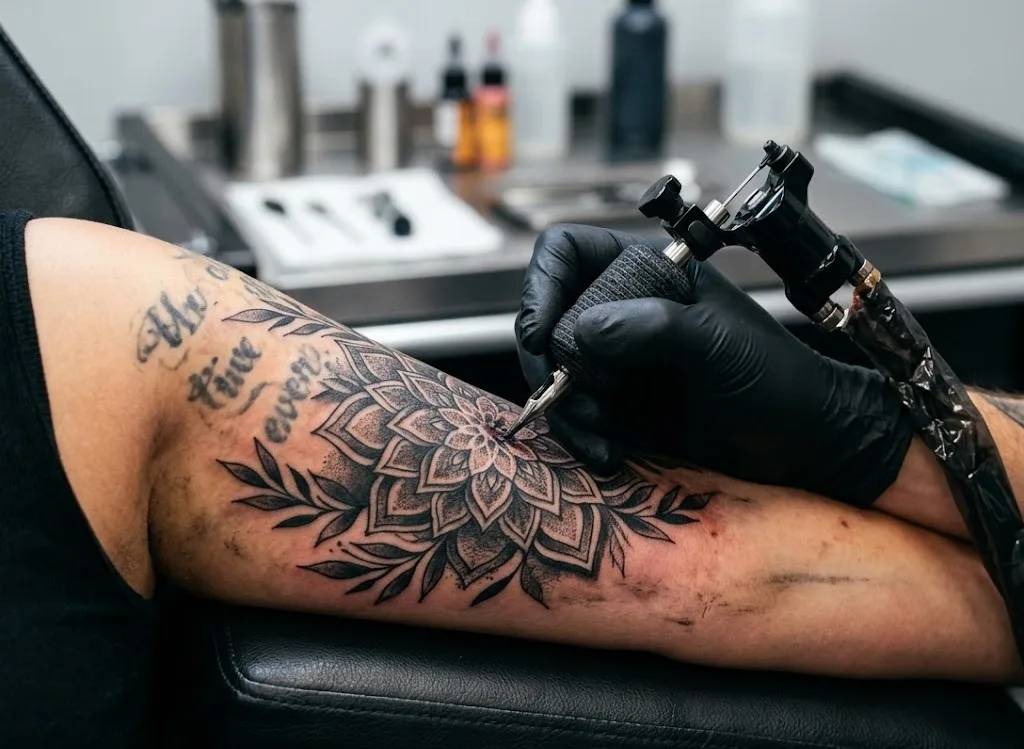
In the humid, high-stakes art scene of Miami, a bad tattoo isn’t a life sentence—it’s a canvas in waiting. If you are asking how do tattoo cover ups work, you’re likely looking to bury a regret under something legendary. At Till The End Tattoos, we don’t just “slap” ink over ink. We treat the process like a strategic restoration project, utilizing color theory and spatial geometry to ensure the ghost of your old ink never haunts your new piece.
Key Takeaways
- Pigment Layering: New ink sits in the same dermis layer as the old, meaning dark pigments and heavy saturation are your best allies.
- Strategic Sizing: Expect a cover-up to be 20% to 50% larger than the original to properly distract the eye.
- Color Math: Deep blues, purples, and blacks act as “anchors” to neutralize existing warm tones like reds or faded oranges.
- Skin Health: Scarred or heavily overworked tissue requires a lighter touch and specific needle groupings to ensure ink retention.
How do tattoo cover ups work to hide old ink?
To understand how do tattoo cover ups work, you must realize that tattoo ink is translucent, not opaque. When we deposit new pigment, it blends with the old ink residing in the dermis. Success relies on “visual deception”—using high-contrast shading, intricate textures, and darker values to trap the old lines within the shadows of a superior, more complex design.
The Strategic Framework for Reclamation
- The Deep Analysis: We scrub the old piece for “weak points” where the ink has faded or the lines have “blown out” into the surrounding tissue.
- Assess the saturation levels of the original blackwork.
- Map out “dead zones” where no new detail can live without laser lightening.
- Architectural Design: We build a custom stencil that places the most detailed parts of the new art—like the eye of a lion or the heart of a rose—over the cleanest skin.
- Align “flow lines” with your natural anatomy to mask the old silhouette.
- Ensure the new composition has enough “open skin” to provide contrast.
- The Layered Application: Our artists use specialized “magnum” needles to pack pigment densely, often requiring a multi-pass approach to ensure the old tattoo doesn’t “peek through” during the healing phase.
- Utilize cool-tone pigments to counteract muddy browns or faded greens.
- Implement “bloodline” techniques for precise mapping before the heavy lifting begins.
Technical Execution & Use-Cases
- Industrial Saturation: For heavy black tribal remnants, we utilize specialized pigments that maintain their depth even after the Miami sun tries to bake them out.
- ROI (Return on Image): Investing in a cover-up is cheaper than a lifetime of long sleeves in the Florida heat. It’s about reclaiming your confidence.
- Tissue Preservation: We monitor skin “trauma” in real-time. If the skin becomes too “shiny” or overworked, we stop. We respect the biology of the dermis.
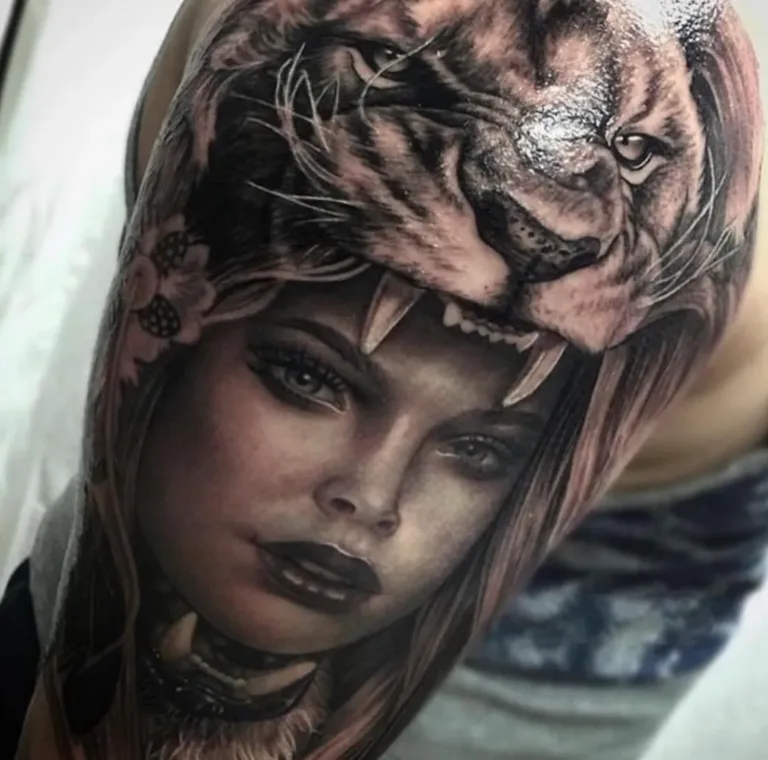
Comparison: Traditional Application vs. Cover-Up Engineering
Feature | Standard Tattooing | Cover-Up Engineering |
Design Freedom | Infinite; any color or style. | Restricted; must follow existing ink patterns. |
Ink Volume | Standard saturation. | High-density packing to overwhelm old ink. |
Color Palette | Full spectrum available. | Limited to darker or more “dominant” hues. |
Placement | Anywhere on the body. | Dictated by the “ghost” of the previous artist. |
Multi-Layered Entity Bullets
- Dermis Layer: The second layer of skin where permanent ink lives and where the “mixing” of old and new pigments occurs.
- Visual Weight: A design principle where dark, busy areas draw the eye away from the faded outlines of the original tattoo.
- Laser Pre-Lightening: The process of using Q-switched or Picosecond lasers to “break up” stubborn ink before an artist attempts a cover-up.
- Pigment Migration: The natural spreading of ink over time, which must be accounted for so the cover-up doesn’t become a “black blob” in five years.
Expert Perspective: The Miami Artist’s Insight
“The biggest mistake people make is thinking they can cover a solid black tribal band with a light-colored portrait. You can’t fight physics. In the Miami district, where the sun is brutal, you need an artist who understands that ink fades at different rates. If you don’t use high-pigment load inks, that old ‘ex’s name’ will rise from the grave in about eighteen months. True mastery is knowing when to say ‘laser it twice first’ versus ‘I can bury this today.'”
Conclusion
A successful tattoo is a collaboration between your vision and the reality of your skin’s history. Understanding how do tattoo cover ups work is the first step in moving from a piece you hide to a piece you flaunt on South Beach. By respecting the technical limits of pigment and the biological limits of the skin, we ensure your new art is permanent for all the right reasons.
Ready to turn that regret into a masterpiece? schedule your consultation at Till The End Tattoos today. Call (786) 205-9570 to schedule your consultation at Till The End Tattoos with a design that actually fits who you are. Contact us today or visit our website.
Frequently Asked Questions
Can any tattoo be covered up?
While most tattoos are salvageable, exceptionally dark, scarred, or “raised” ink may require a few sessions of laser removal to “tame” the pigment before we can successfully apply a new design. We assess each case individually to ensure the skin can handle the new saturation.
Do cover-up tattoos hurt more?
The physical sensation is similar to a standard tattoo, though some clients find the “packing” of ink over old scar tissue slightly more sensitive. We utilize modern techniques to minimize trauma to the area, ensuring a manageable experience even for larger reclamation projects.
How long does a cover-up take?
The timeline depends on the complexity of the “ghost” piece. A simple name might be buried in three hours, while a full-back reclamation could take multiple day-long sessions. We prioritize quality over speed to ensure the old ink stays hidden permanently.
Will the old tattoo still show through?
If engineered correctly with proper shading and “visual weight,” the old tattoo will be invisible to the naked eye. However, using light colors or thin lines over dark ink will inevitably lead to the old tattoo “ghosting” through as the new ink settles.
Should I remove my tattoo before a cover-up?
Total removal isn’t usually necessary. Often, just two or three “fading” sessions with a laser can open up a world of design possibilities, allowing for brighter colors and more intricate details that wouldn’t be possible over a “fresh” dark tattoo.